Understanding the Parts and Styles of Scottish Dirks
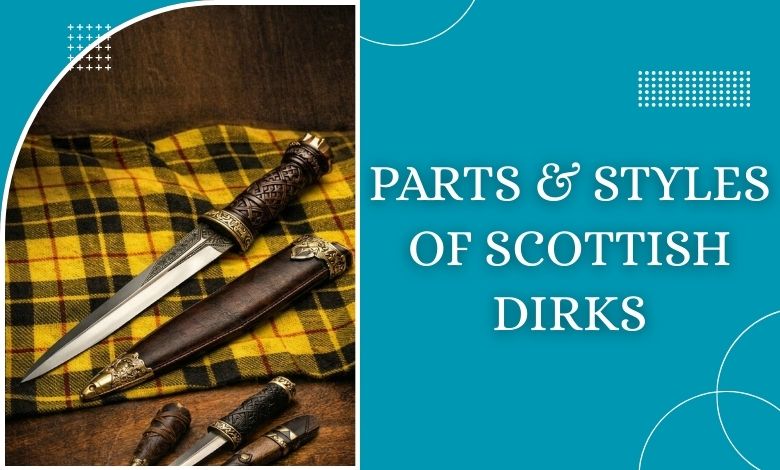
A Scottish dirk, also known as Sgian-dubh or Highland dagger, is a part of Scottish kilt outfits, especially worn at formal occasions. It is a decorative ornament now, but its past is full of feuds and battles. For many centuries, it remained the hidden companion of Scottish warriors. However, its use in today’s world is specific for normal use or only a part of the attire. In this discussion, we will deconstruct it and learn about its different parts. Besides the components, we will be exploring its different styles as well. So, with no further delay, let’s begin our discussion.
Scottish Dirks Explained
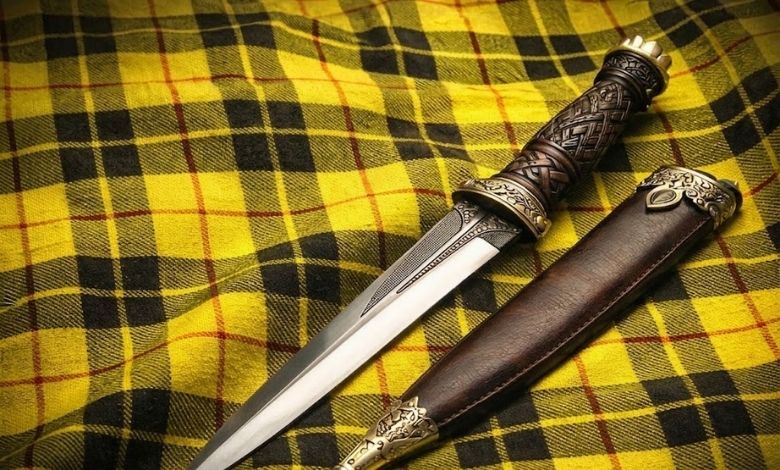
The Scottish Dirk differs significantly from the other daggers used in other cultures. Its overall shape and construction play a role in making it distinctive, as it has a long, sharp blade, which is more significant than others. The blade is connected with a finely designed grip (handle) made from different materials such as bone or carved wood. This Scotland-based weapon fulfills two functions. The first one was its use in battle. Today, it has ceremonial significance, just like tartan kilts. That’s why it has an important place in Scottish culture.
The Scottish Dirk originated in Scotland and is distinguished by its unusual shape and style. The Highland dirk, which is called “dearg” in the Scottish Gaelic word and is the source of its name. Between 1725 and 1800, the dirk was adopted by commanders, pipers, and drummers in Scottish Highland regiments as a standard sidearm for Highland clan members.
Parts of a Scottish Dirk
Interestingly, the Sgian-dubh is not limited to a single style today but has many. However, the number of its components is also a fact. A common individual who does not have that much information and he only knows about the blade and handle. The Scottish dirks are different from other counterparts in this scenario. So, first let us have a look at its parts, and then we will dive into its styles.
Blade
The most prominent part of a dirk is its blade that has a single edge. One side of the blade has a sharp edge, offering it this particular title. The length falls between 12 and 20 inches. The blade is strengthened and made lighter by its fuller, which is a groove that runs towards the edge.
Hilt (Handle)
Handle or hilt, of a dirk is the place that is used to manage it. Many cultures make handles with the wood, while Scots are a bit different and use various materials such as wood, bone, ivory, horn, metal (such as bronze, iron, steel, silver, or gold), and even leather. The hilt usually has raised parts on each side, so it may not slip from the hand or cause any damage.
Pommel
The hilt of a Scottish dagger features another part, which we call a pommel. It exists on the opposite side of the blade and is useful in creating a balance while using. In today’s kilt outfit accessory, it also functions as a decorative part. Moreover, it offers a comfortable place for handlers for its efficient use.
Guard
We can consider the guard to be the most important part of the dagger because it participates as a shield during use. This guard is a raised part between the blade and hilt and protects the hand from getting injured from the attacks of the opponent. Likewise, it also prevents the hands from slipping. The guard further has various types, including crossguards, quillons, and cup-hilts.
Scabbard
A scabbard is a protective case and is essentially a sheath that is constructed with several materials, such as leather, wood, or metal. It primarily aims to house the blade for the protection of users to prevent injuries. Similarly, it also safeguards the blade when not in use or being used as a ceremonial component of Scottish dress. It prevents the blade from catching rust, becoming dull, or causing accidental cuts. A scabbard, in other words, lets the carrier have a safe and convenient experience carrying the weapon.
Styles and Variations of the Scottish Dirk
Besides various designs, the dirks also have several styles or variations, making them specific to certain occasions. We mean, every dirk is not suitable for all occasions, but you make a thoughtful decision while choosing a style.
Military Dirks: Military officers often use this dagger variation as a sidearm. They not only fulfill functional purposes, but high-ranked army personnel carry them for historical and cultural reasons.
Clan and Ceremonial Dirks: Another version of the Scottish dagger associates itself with clan and cultural ceremonies. They often come with clan symbols on their handles and are specific to only one tribe. Their use is very often at weddings, clan gatherings, and events where wearers have to show their identity.
Historical vs. Modern Replicas: Though Scottish daggers are the historical identity of the country, they have become modern now. The traditional dirks had single edges and natural materials such as steel, wood, and bone made them. Now, their copies are part of the markets that are the result of mass-production with modern designs.
Regional or Period Styles: The transformation of the Scottish knife from purely weapon to ceremonial took place in the 18th or 19th century. Scots still use the conventional styles to admire their past. Similarly, several clans or regions of Scotland had unique daggers. The people who currently live in those regions use the same daggers to honor their forefathers.
Usage in Highland Dress and Modern Ceremonies
A few centuries back, Sgian-dubh or Scottish dirk was a useful item in feuds and battles. Have you ever thought why it is still so popular? It is used in two ways today: as a cultural identity and a practical item. In Highland dress, its use is common in weddings as grooms attach with their outfit as a promising fact that he will protect his life partner. In fact, people give it to the grooms as a gift to signify tradition and culture.
Symbolism and Role of Scottish Dirks in Highland Cultural

The use of dirks as fighting and ceremonial weapons makes them an important part of Highland heritage and warrior pride. In particular, they remained very special in Scotland’s military history during the Jacobite rebellions. Like other kilt accessories, daggers also managed to maintain their charm. That’s why they are a sign of respect and suitable for cultural continuity at formal events and Highland games nowadays.
Collecting, Preserving, and Displaying Scottish Dirks
As we know, handling a Scottish dirk can be a bit hazardous as it is a weapon. In fact, there is no room for carelessness. So, you must know how to collect, preserve, and display it safely.
Collecting a Dirk: When collecting a dirk, make sure to keep it covered with scabbard on it and keep the blade on the opposite side of the body.
Preserving The Dirk: When it comes to preserving your Sgian-dubh, store it in a proper case where moisture or extreme temperature may not impact its wooden parts or cause the rust on blade.
Displaying Scottish Dirks: If you are participating in an event where you have to display your dirk, prioritize a replica to prevent any mishap. Still if an original one is in the demand, display it where no one is around and be careful while showcasing it.
Buy Premium-quality Kilt Accessories at The Utility Kilt
Now that you know about the parts and different styles of the dirks, making a decision must have become much easier now. Let us help you solve another problem of finding a reliable store to buy Sgian-dubh, kilts, and other accessories. Go nowhere, turn on your laptop, and explore the exceptional inventory of The Utility Kilt. We are an online website delivering premium-quality products at affordable prices to your doorstep around the world.