Mecleod of Lewis Clan History
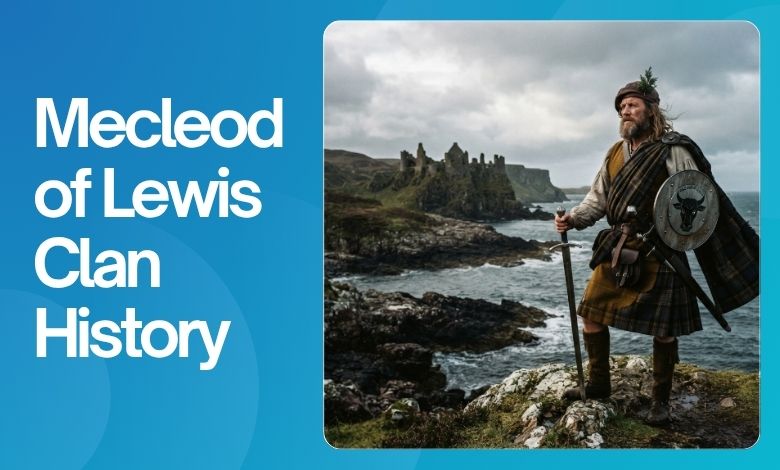
The story of the MacLeod Clan of Lewis is one of power, struggle and great Highland tradition. They were one of the most influential members of the larger Clan MacLeod family and greatly contributed to the history of the Outer Hebrides of Scotland. They are steeped in a culture that remains alive and well today in tartans, traditions, and descendants worldwide, as well as in territorial battles and Norse influences.
Origins of Clan MacLeod of Lewis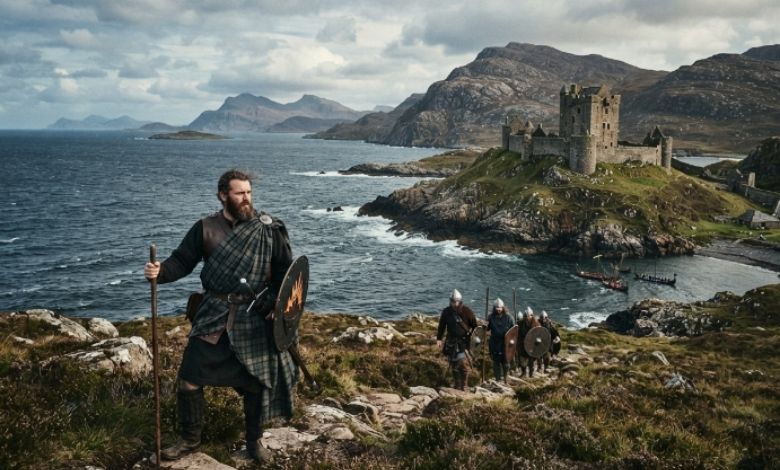
Norse-Gaelic Roots
Clan MacLeod of Lewis descendents one powerful combination of Norse and Gaelic. The early MacLeods were thought to have originated from Leod, who had Viking connections and was a relation of the Norse rulers of the Isles. This heritage formed part of their identity, blending the strength of the Scandinavians with Gaelic culture.
The clan later became divided into two main branches which were MacLeod of Harris and Skye, and MacLeod of Lewis, with the last taking the ascendancy on the Isle of Lewis.
Early Settlement in the Outer Hebrides
The Isle of Lewis, one of the Outer Hebrides, became the Gael’s stronghold. Its geographical isolation conferred a natural defence and meant that the MacLeods of Lewis grew in independence and authority of the area.
Torquil vs. Tormod
The Torquil and Tormod’s feud began for a family lineage tragedy in 1223, the MacLeod Lineage.
An event that marked this clan’s history most was a split between the descendants of Leod’s two sons, Tormod and Torquil. In this division, two principal branches of the MacLeod family originated. Tormod’s line became the chiefs of Harris and Dunvegan in Skye, and Torquil’s ‘descent’ became the chiefs of Lewis.
This brotherly division was no simple matter of territory: it was an element into the political destiny of the Highlands and Islands. Both branches had the same original kinship/Gaelic/Norse background but over time they assumed different names, territories and rivalries. This unit of Lewis was famous for its spirited independence and tremendous prowess over the Outer Hebrides, known as Siol Torquil.
Rise of Clan Power
Strategic Control of the Isle of Lewis
In the medieval era most of the Isle of Lewis was ruled by the Clan MacLeod making them one of the most powerful of the Hebrides. They were able to become powerful and wealthy through their control of land, fishing routes and trade on the market which people admired.
The clan’s leaders were involved primarily in holding onto land, in being opposed by other clans, both within their boundaries and from the Scottish crown, and in fighting to protect themselves from such groups.
Early Clan Leaders
A number of chiefs of Clan MacLeod of Lewis had important roles to strengthen the position. Their leadership brought stability to the clan and helped to strengthen their power in the Western Isles. Some leaders include Leod in c. 1200-1280, William ‘Long Sword’ in 1415-1480, and Hugh Magnus presently. Since it is also important to realise that the clan leaders are mostly the male which are chosen. They have different views and ways to sort out and have a clear vision.
Clan Conflicts and Decline
The Fife Adventurers
During the late 16th Century the island of Lewis was the focal point of one of Scotland’s most esoteric colonization schemes. King James VI wanted to tighten his grip on the island and he distributed territories among a tribe of lowerland lords called the Fife Adventurers.
Their goal was to ‘civilise’ Lewis, to set up trade and to take down the MacLeods of Lewis. The scheme was, however, doomed to failure. The local clan was extremely hostile to the outsiders, assaulting settlements and deporting numerous immigrants.
The climate was inhospitable, the clans were loyal and islanders were resistant to British rule. The Fife Adventurers were unsuccessful but their arrival reduced the political power of the clan and set the stage for future intrusions by the Scottish Crown and the MacKinnons.
Rivalry with Clan MacKenzie
In many ways, the most pivotal event in the clan’s history was the battle of the Clan MacKenzie. Eventually, with the rivalries among the clans clashing in politics and on the land, one angry clan emerged victorious and began fighting the other for years.
The MacLeods of Lewis were eventually outcompeted by the MacKenzies, with the help of the Scottish Crown.
Loss of the Isle of Lewis
The most dramatic event in clan history occurred when Clan MacLeod of Lewis ensured that they no longer ruled the Isle of Lewis. Their control was undermined by internal dissension and external pressures, and eventually took over the region from the MacKenzies.
This had led to the erosion of their political stature, while their cultural identity was not lost.
Culture and Traditions of the Clan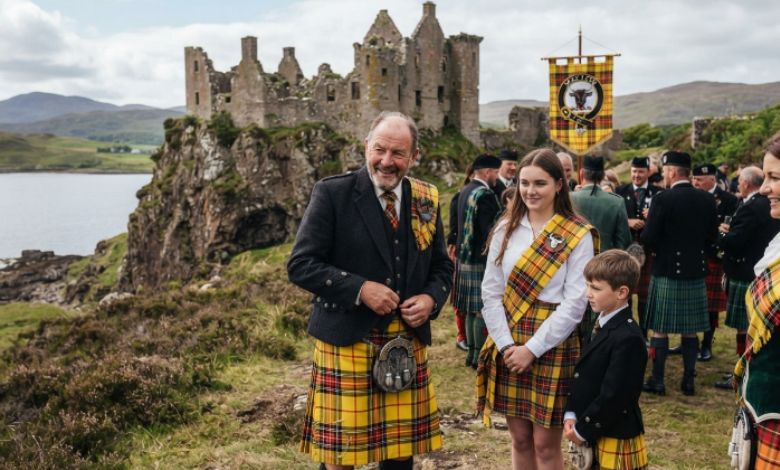
Symbols and Tartans
The clan has associated tartans and symbols which represent the clan’s heritage. These designs are still seen today in the Highland clothing such as kilt, scarfs and kilt accessories and therefore keep their identity.
The “Loud MacLeod”
The renowned MacLeod Dress Tartan, also known as ‘The Loud MacLeod,’ is one of the most legible tartans in Scotland, where it can be spotted on most people from even the furthest distance.
Attributing this tartan with its symbols of pride, boldness and visibility to the MacLeod clan. The Loud MacLeod is not like the darker and more subdued blouses of other tartans, but it is a cry of strength and pride.
Its more common association is to the MacLeods from Harris and Dunvegan but it is also practiced by the Lewis branch. It is still one of the most famous Highland tartans today (the other being Galloddach) and continues to be worn at weddings, congregations and Highland Clan events across the country and internationally.
Castles and Strongholds
The ancient strongholds of the Isle of Lewis are amongst the most famous historical sites associated with the clan. These were their power and strategic significance in the Highlands.
Clan MacLeod of Lewis Today
Modern Descendants
There are people around the world who claim to be descended from the Clan MacLeod of Lewis today and especially in Scotland, Canada, the United States and Australia. Today there are still many that can proudly pronounce their origin from the clan where people wear Macleod of Lewis Tartan Sash.
The 2011 Recognition
One significant event in the Clan MacLeod of Lewis’ history occurred during the year 2011 when the chiefship of the clan was laid to rest after being dormant for hundreds of years only to be officially reinstated once more. Very significant for descendants who over the years had been waiting to restore their historic line.
The recognition revived a title which had not been used since the early 17th Century when the lands of the clan were forfeited. This was a moment of more than just a genealogy, it was a moment of “restoration” of identity, pride and continuity.
This recognition spurred renewed interest among many descendants around the world to the clan’s history and traditions. It also reinforced clan gatherings and cultural celebrations, ensuring the MacLeod legacy of Lewis would live on in the present day.
Cultural Revival
A revival in Scottish clan heritage has been experienced in recent times. The traditions of Clan MacLeod of Lewis are continued in festivals, gatherings and Highland games and the history lived. There are outfits that people wear to reflect their culture such as Macleod of Lewis Kilt and honor their clan history.
Why Buy Clan-Inspired Highland Wear from The Utility Kilt
For those who want to express their Scottish heritage through their attire, Our online store has a wide choice of Highland wear sourced from the clans of Scotland.
- Authentic Designs
- Real Scottish Tartans and wear that are based on the clans.
- Quality Craftsmanship
- Highland wear is long-lasting with durable materials and attention to detail.
- Affordable Heritage Wear
- Good value for money quality products that are available for every customer.
If you’re a member of a Scottish family lineage, or if you have an affinity for Scottish culture, utility Kilt offers the ideal wearable way to show off your Scottish heritage.
Conclusion
The Clan MacLeod of Lewis has deep and strong roots that emanate from the Norse-Gaelic past, the power of their lands, and the culture that they were born into. While their political significance has waned over the years they have maintained their identity through traditions and of course through descriptors, their global descendants.
It is a story of Scotland’s rich Highland heritage and of the enduring power of the clan culture.