Kilt Hose Materials: Wool vs. Cotton vs. Synthetic Socks
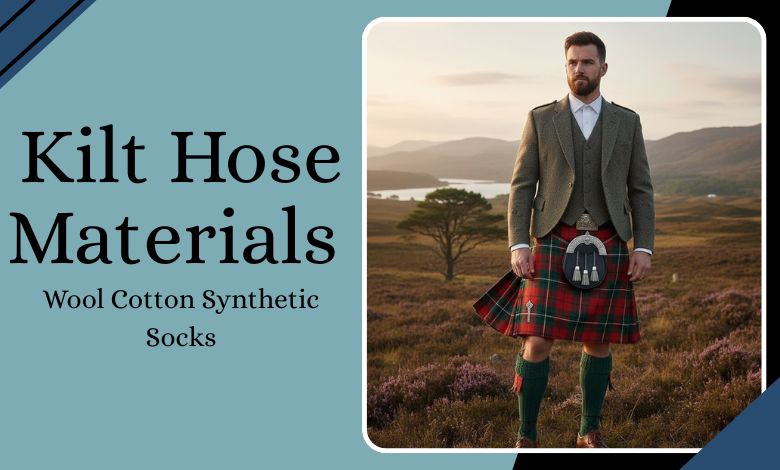
A kilt outfit is the traditional dress of Scotland that Scots have been wearing for centuries. This outfit is different from others, as it has many accessories. All attributes it has are traditional and have a certain purpose with unique histories. Today, we will be discussing different materials used in making kilt socks, also known as kilt hose. So, let’s begin.
Kilt Hoses and Materials Used to Make Them

Those who are new to the kilts often consider standard and kilt socks to be the same. This is a misconception, as kilt socks are longer in size, covering legs just below the knees. Traditionally they are made with the same fabric that makes men’s plaid kilts, which is none other than wool. However, things have modernized now, and synthetic materials have become popular.
Wool Kilt Hoses
Wool is the traditional and primary material to make Scottish kilt socks. It is a warm and durable fabric. The purpose of using this certain substance was to keep the legs warm during Highland winters. It also features natural elasticity, durability, and the ability to regulate temperature and has some additional traits, including wrinkle resistance, odor control, and biodegradability. Socks made with this fabric are often paired at formal events like weddings and cultural events.
Advantages
- Woolen socks are highly breathable, preventing wearers from skin conditions.
- Wool is a renewable resource that biodegrades naturally, unlike synthetic materials like polyester.
- Wearers do not have to struggle with odor management, as they naturally resist them to a specific level.
- Enhancing the comfort experience” is vague. Could just say “making them very comfortable.
Disadvantages
- Kilt socks made with wool can be more costly than those made with other materials.=
- They are difficult to maintain, as wool is not a frequently washable material, nor can it be machine dried.
- These socks are less versatile and can be paired with traditional kilts only.
- Woolen hose may not be suitable for every skin type and can cause itchiness to some.
<h2Cotton Kilt Hoses
Let’s talk about cotton now, whose use is also common in making kilt socks, but its use is less common compared to wool. Cotton is generated from cotton plants, and it is extremely soft and comfortable comparatively. They effectively absorb the sweat from the feet, which does not let them become odorous. So, they do not fit sports activities such as running, nor do they suit formal settings.
Advantages of Cotton Socks
- Being a natural fiber, cotton is gentle to the skin.
- Their construction with natural material allows for better air circulation, helping to keep the foot cool even during long wears.
- They effectively absorb the sweat from the feet, which does not let them become odorous.
- Cotton socks are easy to maintain, as they are frequently washable, but the weight heavily impacts the frequency.
Disadvantages of Cotton Socks
- Even though cotton absorbs the moisture, it cannot wipe it away effectively, which may keep the feet damp.
- Cotton socks are not suitable for winter and cannot trap the heat.
- The fibers are more fragile and prone to wear and tear, leading to holes and thinning over time.
- These socks cannot maintain their shape and elasticity for a longer time and become loose.
Synthetic Kilt Hoses
Because of their cost and adaptability, synthetic fabrics like polyester, acrylic, and nylon have become popular in making kilt hose. These materials offer durability at a reduced cost by imitating the characteristics of natural fibers. Synthetic kilt hose are frequently utilized in casual attire, sporting occasions, or any other situation where longevity and convenience of upkeep are more important than custom.
Benefits of Synthetic Kilt Hose
- Synthetic fibers are strong and resistant to wear compared to natural materials and are more long-lasting.
- They do not face wear and tear after machine-washing, which means they require minimal care.
- Keeps feet dry by pulling moisture away from the skin.
- The construction of synthetic materials is with artificial ingredients, which means they are generally less expensive than wool, offering good value.
Drawbacks of Synthetic Materials
- Synthetic materials are less breathable, which means they cannot absorb moisture.
- They do not have natural odor-absorbent properties and can quickly become smelly.
- Synthetic materials are not renewable at all, which means they are non-biodegradable.
- Raw materials can become a source of microplastic pollution.
Comparing the Three Materials
| Features | Wool Kilt Hose | Cotton Kilt Hose | Synthetic Materials Hose |
| Material Type | Natural wool fiber | Natural cotton fiber | Man-made fibers (polyester, acrylic, nylon) |
| Comfort & Feel | Warm, soft, slightly itchy | Very soft and skin-friendly | Smooth but less natural feel |
| Breathability & Moisture | Very breathable, handles moisture well | Breathable but stays damp | Wicks moisture, less breathable |
| Durability & Care | Strong but needs gentle washing | Moderate strength, easy care | Very durable, machine washable |
| Eco-Friendliness | Renewable and biodegradable | Renewable and biodegradable | Non-renewable, not biodegradable |
| Best Use | Formal and traditional wear | Everyday casual wear | Casual or outdoor wear requiring durability |
Which One Is the Best?
Now that you are familiar with the key features of wool, cotton, and synthetic materials, the next thing is to find the ideal one. The selection of a material relies on several factors, such as the event’s formality, the weather, and your personal preferences.
Woolen socks are for hotter climates and formal settings. If you need socks for cold weather with natural flair, none is better than cotton. Likewise, synthetic materials are suitable for sporting activities where durability is the core requirement.
Choosing the Right Kilt Hose
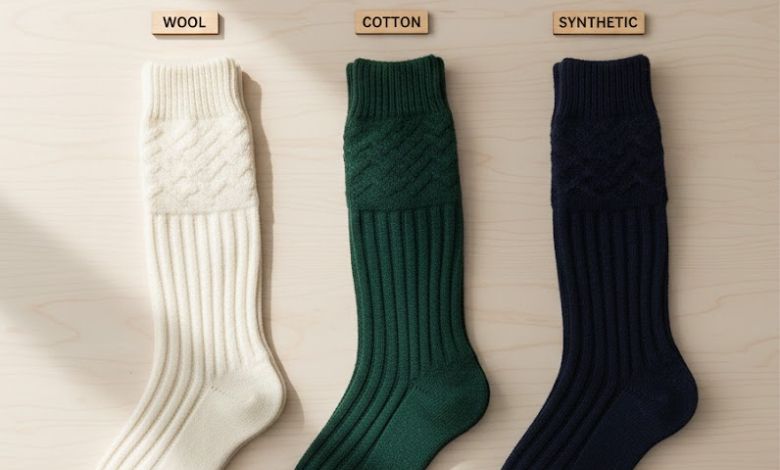
While choosing the right kilt hose, what should you look for? Is it enough to know how formal the event is, or do you need to pay attention to other details too? Let’s proceed to explore.
Consider Climate: While choosing a pair of socks, keep the climate as a core consideration.
By Occasion: The next thing is the occasion’s nature, as synthetic materials are not appropriate for formal Scottish festivals.
Decide By Budget: Do not overlook budget while selecting between the material of Scottish socks. Remember, synthetic materials strongly mimic the natural fibers but lack traditional flair.
By Skin Sensitivity: If you have allergies to any materials, it’s best to avoid them, as doing so will help ensure maximum comfort.
Buy Durable Kilt Hoses Online at The Utility Kilt
You now have a good understanding of the different kilt hose materials and how to select the ideal option. The next thing is to look for a store where you can buy socks. When buying formal kilt hose, ensure buying from a well-reputed kilt store such as The Utility Kilt to complete Scottish looks. Remember, stores that customize kilts often do not sell synthetic material products from kilts to hose and fly plaids.