Your Checklist for a Complete Scottish Kilt Outfit
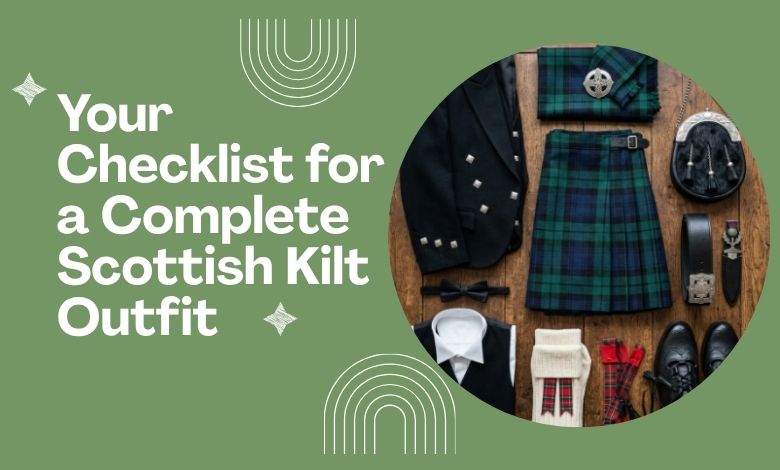
Wearing a full Scottish kilt outfit is not merely about putting on a kilt- but it is about putting on a well-balanced appearance where each piece has its purpose. Every single element, starting with the fabric of the kilt, to the smallest of accessories, is a part of tradition, comfort and presentation as a whole.
First-time buyers often overlook the important details, this is why it is better to have a clear checklist to make sure that your outfit does not look unfinished.
The Core Foundation – The Kilt Itself
Choosing the Right Tartan or Style
The entire outfit is determined by the kilt. The old tartan kilts are best worn on special occasions and heritage dressmaking and the new designs such as utility kilts are aimed at comfort and utility.
To illustrate, in dressing a more conservative look, match your outfit with an accessory such as the Ladies Royal Stewart Tartan Hybrid kilt to give your outfit a unified look, particularly in formal events. In the same way, the alternative such as the Ladies Hulme Tartan Sash may add a classy touch when paired with certain tartans.
Fabric, Weight, and Construction Quality
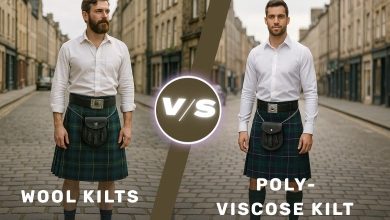
A good kilt must have some structure and it must be able to keep its shape. Deeper materials have a better draping effect, whereas correctly sewn pleats are long-lasting. A kilt that has been poorly made will not stand the shape very long and this will impact the whole outfit whatever fine accessories it may have.
The Fit Check: Ensuring Your Kilt Sits at the Right Height
Essential Upper Wear Components
Kilt Shirt (Jacobite vs Formal)
How formal your outfit is depends on your kilt shirt. A White Jacobite ghillie shirt is comfortable and old-fashioned whereas a crisp dress shirt is ideal during a wedding or any other formal party. The trick is not to be confused about your styles but make your shirt match your purpose of dressing.
Kilt Jacket and Waistcoat Options
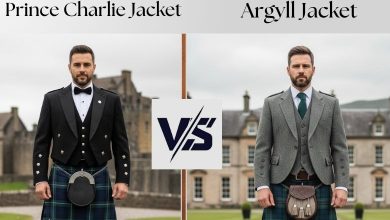
The jackets add structure and enhance the appearance. Argyll jacket can be worn at a semi-formal occasion and Prince Charlie jacket is worn at full formal occasion. The addition of a waistcoat will make the upper half more complete and provide a more balanced figure.
Neckwear: Ties, Bow Ties, and Ruche Ties
Lower Accessories That Complete the Look
Kilt Hose (Socks)
Kilt hose is both comfortable and pleasing to the eye. They are used to fill the gap between the kilt and the shoes so that the outfit is not left with no details. Flashes are not huge; however, they do make the difference of adding a small tint of color and securing the hose.
Ghillie Brogues
Ghillie brogues are worn with kilt outfits. Their special lacing system makes them look authentic, and they are especially effective in formal occasions. Although casual shoes can be worn with utility kilts, brogues will always be the best when it comes to wearing.
Flashes and Their Role
Flashes are fitted just below the knee to keep kilt hose in place and offer the garments an extra dash of tartan colour. They harmonise with the pattern of the kilt and balance out the outfit viewed visually.
Functional and Decorative Accessories
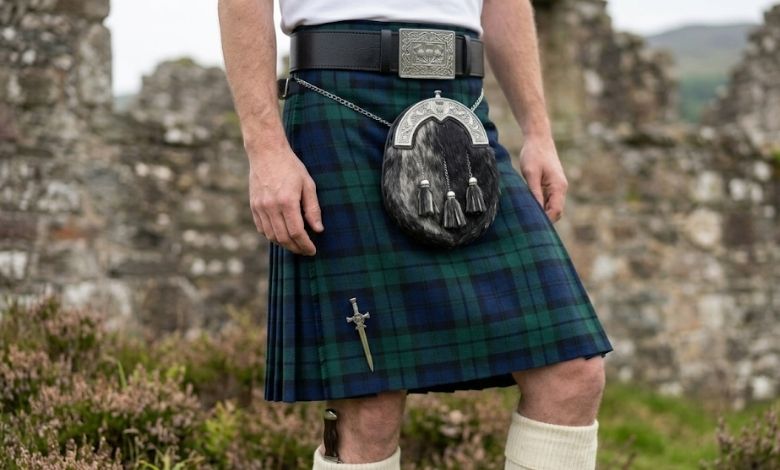
Style is only part of the game with kilt accessories, many have a function in the outfit as well. When combined, they take in a refined appearance which is an expression of tradition and personal style.
Sporran (Day, Semi-Dress, Dress)
Kilt Belt and Buckle
The kilt belt is broader in width than a conventional belt, and is more of a structure to the outfit when worn with more relaxed styles. The buckle is often decorated with Celtic or clan patterns and serves to attract attention.
Kilt Pin
The front apron has a kilt pin attached to it to add weight and to make it less likely to move when it is being worn in windy weather. It will also be a nice embellishment and may represent the history or the individual’s tastes.
Sgian Dubh
Sgian dubh is a small traditional knife which hangs inside the top of the kilt hose. It’s now used primarily for ceremonial purposes and to give an authentic touch to formal Highland attire.
Hardware Harmony: Matching Your Metal Accents
Ideally all the metal elements (belt buckle, kilt pin, and sporran chain) will be of the same tone; the tone of the metal does not affect the look of the garment.
The Etiquette Rule: Waistcoat vs. Belt
The kilt belt may not be used with a waistcoat as it interferes with the silhouette. The waistcoat is worn to replace the need of any belt altogether for formal times.
Additional Elements for Formality and Authenticity
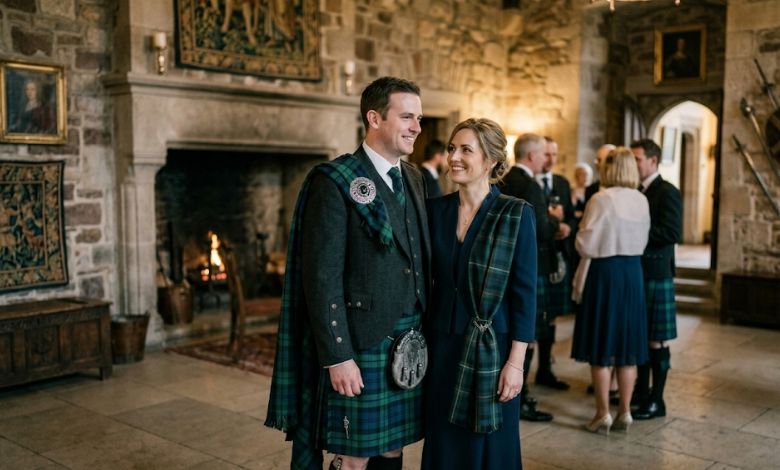
Fly Plaid and Brooch
A fly plaid is a nice addition to formal events to provide richness and tradition. It is worn on the shoulder and is held by a brooch to make it more ceremonial With proper styling, it complements the outfit but does not overwhelm it.
Plaid Accessories and Styling Tips
Balance is important. Rather than including all the possible accessories, work on coordination. Wearing your tartan with coordinating pieces like pairing a kilt with a sash such as the Ladies Hulme Tartan Kilt Sash makes it more elegant.
Occasion-Based Styling Guide
Casual / Utility Wear
The kilt outfit is to be always suitable to the setting. Hence, casual kilt outfits are best for your daily wear.
Semi-Formal Events
A utility kilt worn with a plain shirt and boots is sensible and comfortable as a casual dress. Semi-formal attires have the advantage of structured jackets and matching accessories.
Full Formal (Black Tie / Weddings)
In the workplace, even the minutest details count. With a tartan kilt and a complete outfit (consisting of jacket, sporran, brogues and optional sash. A complete outfit such as Kilt Outfit Package Deluxe is to achieve a complete and polished look.
Why Buying from The Utility Kilt Makes Sense
It is as important to select a supplier as it is to select the outfit. Our store The Utility Kilt specializes in the distribution of properly structured clothing that fits well and does not change the shape over time. The attention to detail, starting with stitching up to the choice of fabrics, means that every piece will do well in its looks and life span.
Besides this, the fact that it is possible to purchase coordinated accessories, like tartan sashes, and contemporary kilt types makes it simpler to create a complete outfit under a single roof. This will save time and provide uniformity in gesture.
Common Mistakes to Avoid
Overloading the outfit with a lot of accessories is one of the most frequent mistakes. Although it is necessary to have this number of items, the number can be excessive to create a heavy appearance.
The other problem is the misaligning degrees of formality. A jacket is formal and a kilt is casual making the balance unbalanced. Fit also plays a role–the kilt is either too low or too high, to fit the classic shape. These details allow one to look after a clean and natural appearance.
Conclusion
A full Scottish kilt outfit is not merely a set of pieces, but how those pieces fit together. Even the kilt itself or the well-thought-out details, each aspect adds to the overall appearance. With a well-organized checklist and selection of good pieces, you will be able to create an outfit that would look traditional and well-constructed.