Exploring Different Types and Designs of Kilt Pins
Modern kilts have come a long way in the versatility they can offer – consideration of tactical kilts and utility kilts are two of the more popular alternatives to traditional tartan kilts. Though they look almost the same and have the same kind of functionality, each one is assembled for a specific purpose. Tactical kilts are more focused on being rugged, durable and having sufficient space for storage, while utility kilts have to do with regular wearing and ease, versatility, and comfort. These two styles are comparable and knowing how to pick the right one for you could help you pick the right outfit for everyday use, your style and needs in the long run.
Why Kilt Pins Matter in Highland Dress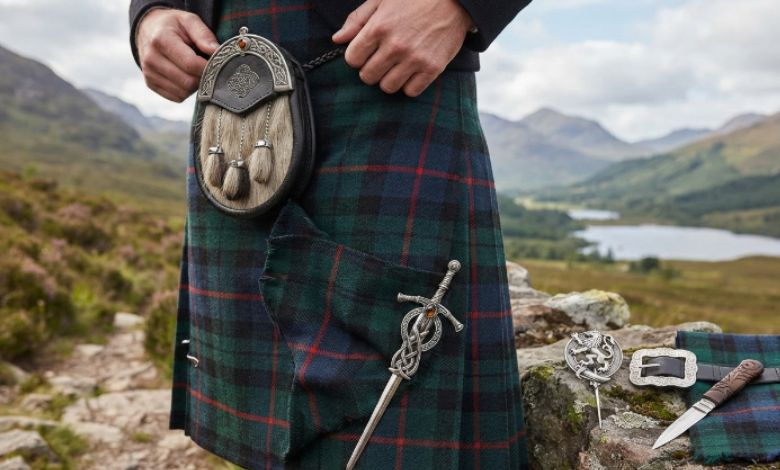
A Functional Accessory with Timeless Appeal
This is a beautiful, timeless and practical accessory you can enjoy for years.
Many people imagine that a kilt pin is simply ornamental, but they were actually thought of for a reason. The pin is used to hold the outer apron of the kilt in place to ensure that the kilt hangs properly and doesn’t get blown around by the wind or moved around by walking. One should be aware that a kilt pin isn’t meant to join the two pieces of the aprons. It should not be attached to the inside of the apron, but only outside; this way the kilt will keep that natural drape and free-flow.
This practical bit of wear came to be an integral component of Highland gowns over time. Nowadays it is a further finishing piece that will lend an elegant and finished look to an outfit of kilt pieces.
Adding Character to Your Kilt Outfit
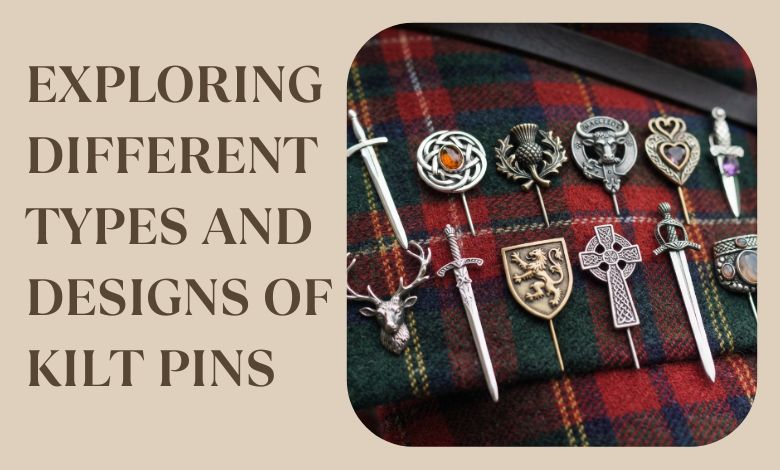
A kilt pin is another device to exude your particular individual style. The kilt pin can symbolize individual interests, Scottish identity, or even just a trend, while the tartan is frequently a symbol of Scottish tradition and family heritage. There are many different designs, such as symbols from Celtic culture or military designs as well as minimalistic modern designs, such as a Celtic cross, or many other choices.
A thoughtful selection of kilt pin, paired with the Highland’s belt buckle, sporran and other gear, can help weave an inextricable tapestry that feels both traditional and unique.
The Most Popular Types of Kilt Pins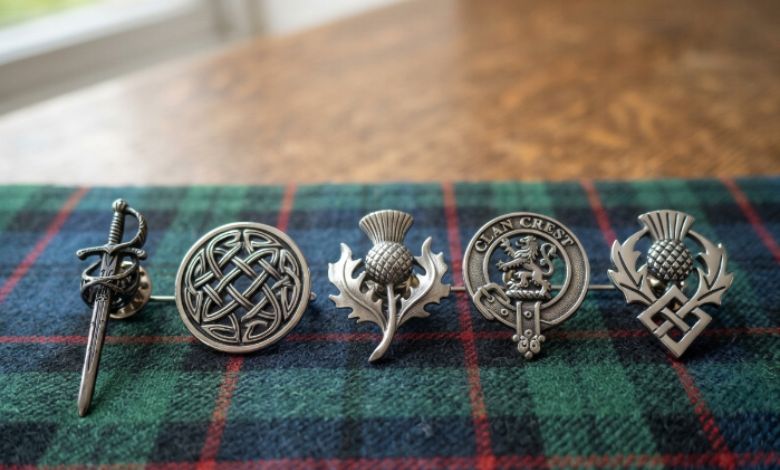
Sword Kilt Pins
It is not at all hard to imagine that everyone has encountered the sword kilt pin. It is made in a way that it is like the traditional Scottish claymore and you see or observe the courage and honor in it.
This is because it is always in style, the sword kilt pin is often suggested for a brand new kilt wearer. It looks good with traditional and modern Highland outfits.
Celtic Knot Kilt Pins
Celtic knot patterns are also popular for centuries since they are symbolically meaningful and have an intricate look including Scottish Shamrock Kilt Pin. They keep repeating their patterns, which signify eternity, unity and the interrelatedness in life. Such designs have a unique Scottish feel and enhance depth and character.
Pairing with traditional tartans and formal Highland dress, the Celtic knot kilt pins are a versatile type of fitting accessory. They are often selected for marriage, Burns Night, clan events and more events where Scottish traditions are highlighted
Thistle Kilt Pins
The thistle is a symbol that is native to Scotland and long established as the country’s national flower and is one of the most important symbols used in Highland accessories with Handcrafted Scottish Kilt Pins. It is showing pride and strength where it can have timeless elegance and it is again perfect for any event. As a result, you get what you really need to have the best native kilt pin design. They can be worn for both formal Highland attire or smart chilling all day with a kilt.
Clan Crest Kilt Pins
Scottish wear for a lot of people is not only about style, but additionally about paying tribute to family history. Kilt Pins for Clan Crest showcase the crest of a particular Scottish clan which a wearer may use to wear certain traditional Highland clothes and honor their family.
These pins are particularly enjoyed at clan gatherings, child games, family marriages and cultural feasts. The traditional craftsmanship and symbolic element of the designs for clan crests are given great value by those who are not directly related to Scotland.
Custom and Contemporary Kilt Pins
Additionally, the kilt pins have evolved from the traditional and symbolic items to more personalized and contemporary designs. Some such as initials, geometry, animals, Celtic dragons and special art designs are engraved, while others are designed specifically to show the design of the wearer for instance Irish Harp Kilt Pin Custom.
These styles are especially favored for utility kilts and contemporary Scottish wear, enabling people to fuse the legacy of the Highlands with their own personal style. It can even be a memento or meaningful gift for somebody who wears highland attire on a regular basis.
Choosing the Right Kilt Pin Design
Coordinating with Belt Buckles, Sporrans, and Other Accessories
When choosing the kilt pin, be sure to take into account the style of your clothing and the occasion you are going to wear it. Many of the traditional symbols, including swords, Celtic knots, thistles, and other types, are good pieces to pair with formal Highland garments, particularly when paired with Prince Charlie or Argyll jackets. For casual kilts or utility kilts a simpler or more modern design may be a better choice.
Their purpose is to achieve an integrated look where each piece complements, rather than overpowers others:
Selecting the Right Size and Finish
The choice of sizing is at least as critical as the selection of the design itself. The kilt pin should be prominent, but not too prominent so as to overpower the front of the kilt. Kilt pins are traditionally 3 to 4 inches in length which ensures that the outer apron remains in place and that the length of the kilt is appropriate for the length of the tail.
The finish also adds to the overall style. These hairs are sleek, contemporary, and look great with a modern Highland outfit, thanks to the polished chrome or stainless-steel pins. The pewter finishes go hand-in-hand to have a more classic touch, which is perfect for ceremonies and classic tartan wear. If you prefer something low-key, matte finishes are an alternative option. Ideally, whichever finish you go with should work with the metalwork of your belt buckle, sporran and other Highland accessories in order to appear coordinated.
Materials Used in Quality Kilt Pins
Pewter, Stainless Steel, and Chrome Finishes
The type of material used in a kilt pin dictates its look, style, and durability. Pewter has always been a favorite of mine as it means you can craft such as you want and make your pin look genuinely old. Due to its classic appeal, many of the Highland designs are still manufactured using pewter.
Another option is stainless steel which is great, particularly for those who wear kilts on a daily basis. Not problematic with rust, scratches or general use and will remain shiny for years. The chrome plated kilt pins are also a brightly finished pin that can be used with modern Highland garments and are not particularly hard to maintain. Whether you opt for the wood, leather, or steel version, you can expect that your ceramic pin will accompany you for a lot of occasions.
Antique, Polished, and Matte Styles
The finish on the surface of a kilt pin is important as it is the finishing touch that gives it a different personality. Antique finishes lend an older look to the garments, making them perfect for historical and vintage style wear. Polished finishes bring a nice touch of elegance and beautifully suit to black-tie events, formal dinners and weddings.
Lately, matte finishes are making an upswing at the present time in Highland Modern fashion due to their subdued sheen. Choosing a suitable finish is key for your kilt pin to fit in with the other clothes in your ensemble and also show your own personal fashion.
How to Wear and Care for Your Kilt Pin
Correct Placement on the Front Apron
There is as much emphasis on correctly wearing a kilt pin as there is on the actual design. Pin should always go on the outside of the kilt, typically a few inches up from the bottom hem and towards the outside of the kilt. This positioning provides support where necessary while giving the kilt a natural feel in the air and will not create a tight fit.
Many people think that the pin should attach both the aprons. This will limit movement and the natural ‘flair’ of the kilt. With proper placement, they will help keep the Highland look and maintain comfort.
Cleaning and Storing Your Kilt Pin
A good kilt pin needs very little maintenance, however regular upkeep can help maintain the finish of the kilt pin. Wear it, and then buy a soft cloth and gently wipe away the finger prints, water and dust. The soft brush can be used for dusting small crevices if the design is detailed engraving or has Celtic knotwork to avoid damaging the surface.
It is advisable to store the kilt pin in a kilt pouch made of fabric to avoid getting scratched by other jewellery, or in a jewellery box. With adequate storage it is capable of lasting for many years, provided it is not properly matured.If not properly matured, it will stay in good condition for many years with only adequate storage.
Common Mistakes to Avoid When Buying a Kilt Pin
Choosing Style Over Quality
You might find a great looking design but it’s important to consider quality first. Many kilt pins are poorly-constructed and have short-lived fastenings, rough edges or finishes because they can be cheaply produced. A good, well-made pin is more durable, can be more detailed and will adhere to your kilt more securely.
The good kilt pin will be seen again and again, and is certainly worth putting in your Highland wardrobe.
Ignoring Size, Weight, and Compatibility
Others misjudge when they acquire a kilt pin without taking into account that the design functions together with the other garments. A larger pin might just be too large and overpower the front apron or a smaller pin might simply not be enough to balance the front apron.
As well, it’s extremely important that it matches your buckle, sporran and other pieces of jewelry. Once these elements are combined, it makes a striking Highland fashion.
Why Buy Kilt Pins from The Utility Kilt?
A kilt pin can seem like a trivial item, but is quite significant in finishing Highland dress. This strikes a balance between practicality and enduring style, and serves the purpose of livening up the front of the kilt while also making it a personal expression of personality through meaningful design.
You must choose a reliable platform such as The Utility Kilt shop. Whether it’s a traditional sword, Celtic knot, clan crest or modern design, there is a style for them that would be appropriate for any occasion for the kilt-wearer. A good kilt pin will look a part of your Highland style, allow your outfit to blend in evenly and won’t detract from the overall style of your Highland dress.