5-Yard vs. 8-Yard Tartan Kilts: Differences and More
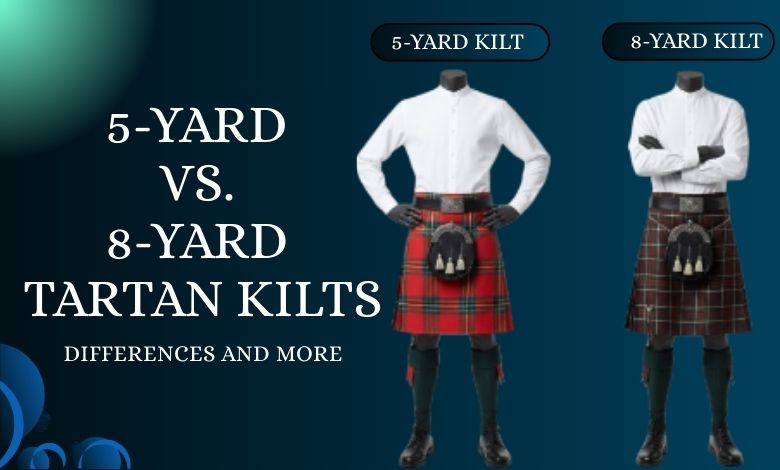
Coming into being many centuries ago, tartan kilts are still worn by every Scot. Those who are new to kilts usually get confused when they have to choose the quantity of kilt fabric. They are right because different sizes of fabrics are used in their construction, with 5 and 8 yards as the most used sizes. So, what sets them apart? This article is meant to figure out the answer to this query. Before diving into their differences, let us understand what tartan kilts are and what kilt yardage is.
Tartan Kilt and Overview of Kilt Yardage
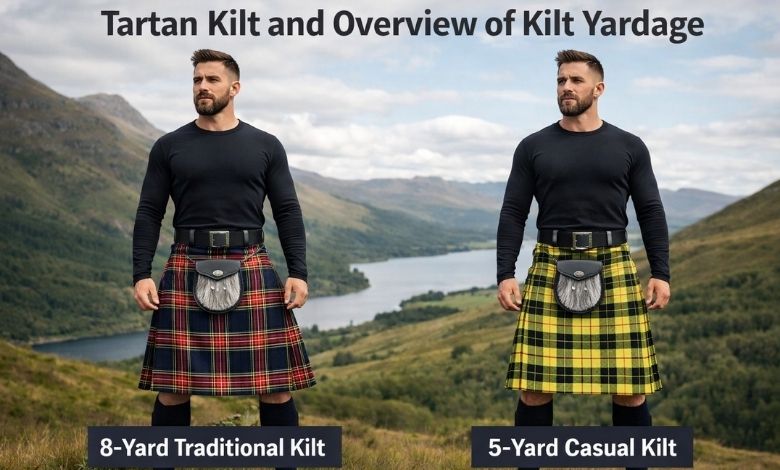
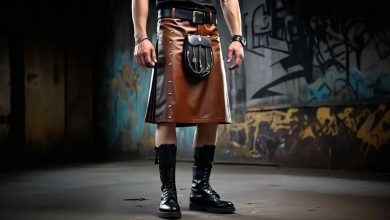
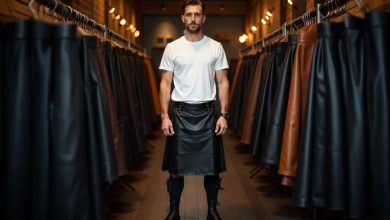
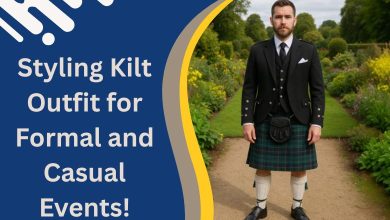
Many types of men’s kilts, including tartan, denim, leather, and utility kilts. Modern kilts are contemporary and versatile, while traditional tartan kilts are less versatile and specific to formal settings. These kilts are made with tartan fabric, which is a notable identity of Scottish culture. Every tartan has specific patterns and colors that connect it to a clan.
Let’s talk about the kilt yardage now. Kilt yardage refers to the amount of fabric used to make a kilt, with the two main types being the traditional 8-yard kilt and the casual 5-yard kilt. Both of these figures use different lengths of fabrics, and the kilts made with them also differ from each other.
5-Yard vs. 8-Yard Tartan Kilt
When it comes to differences between kilts made with 5 and 8 yards of tartan, we may find many dissimilarities from draping to number of pleats and events to wear.
Draping and Structures
5-yard kilts: This length of fabric is considered to be casual and more relaxing because of the reduced weight; that is why they are worn in summer. From the perspective of drape, being lightweight offers a wider feel and a less voluminous drape.
8-yard kilts: On the other hand, an 8-yard kilt offers a bulkier look with crispness in its fall because of the extra fabric, and the swings it provides to the pleats make it look beautiful.
Pleat Styles
5-yard kilts: Another must-discuss point is the impact of fabric on its pleats. Regarding the 5-yard kilts, the pleats use less fabric, and they make wider, shallower pleats and a lighter overall garment.
8-yard kilts: If we talk about the pleats of 8-yard tartan kilts, they are deeper and narrower and provide a bulkier look. These kilts come with the standard number of pleats, ranging from 25 to 34, while the other size has fewer pleats.
Movement and Activity Level
5-yard kilts: Free mobility is the primary purpose of kilts, regardless of the fabric’s size. A 5-yard kilt is considered to be more mobility-friendly because of its lighter weight and wider pleats.
8-yard kilts: No one can question the activity level of an 8-yard kilt, but still it lacks somewhere comparatively. The most common reason is none other than having heavier and tighter pleats.
Storage and Maintenance
5-yard kilts: Proper maintenance and storage are the factors that decide the lifespan of kilts. A 5-yard kilt dominates here because it does not need too much maintenance attention; however, being careful about maintenance is crucial.
8-yard kilts: An 8-yard tartan kilt, at the same time, differs a bit, and its longer fabric and bulkier shape demand more maintenance. The kilt owner has to be careful everywhere from washing to drying and storing.
Ideal Events to Wear
5-yard kilts: Regarding the events to wear them to, 5-yard kilts are worn casually. They are worn as everyday wear or at casual, relaxed events such as casual gatherings or outdoor activities.
8-yard kilts: 8 yards is the standard size to make formal kilts at several stores, and this size is for formal and semi-formal events such as weddings, clan gatherings, and other cultural festivals.
Price Difference
5-yard kilts: Price is a major factor when overviewing the difference between 5-yard and 8-yard kilts. As kilts made with 5 yards of fabric use smaller amounts of fabric, they are more cost-effective, and the labor cost also plays a role in it.
8-yard kilts: These kilts are considered to be costlier because of increased fabric and labor costs for making narrower and deeper pleats.
Side-by-Side Comparison Chart
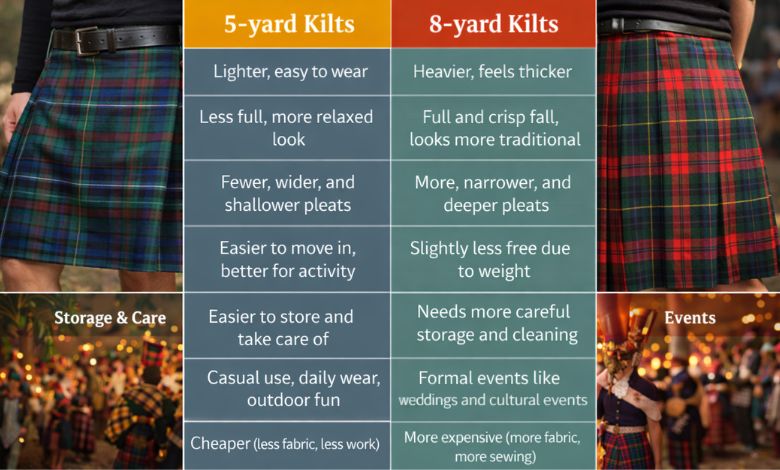
| Features | 5-yard Kilts | 8-yard Kilts |
| Weight | Lighter, easy to wear | Heavier, feels thicker |
| Drape | Less full, more relaxed look | Full and crisp fall, looks more traditional |
| Pleats | Fewer, wider, and shallower pleats | More, narrower, and deeper pleats |
| Movement | Easier to move in, better for activity | Slightly less free due to weight |
| Storage & Care | Easier to store and take care of | Needs more careful storage and cleaning |
| Events | Casual use, daily wear, outdoor fun | Formal events like weddings and cultural events |
| Cost | Cheaper (less fabric, less work) | More expensive (more fabric, more sewing) |
Other Yardage Options
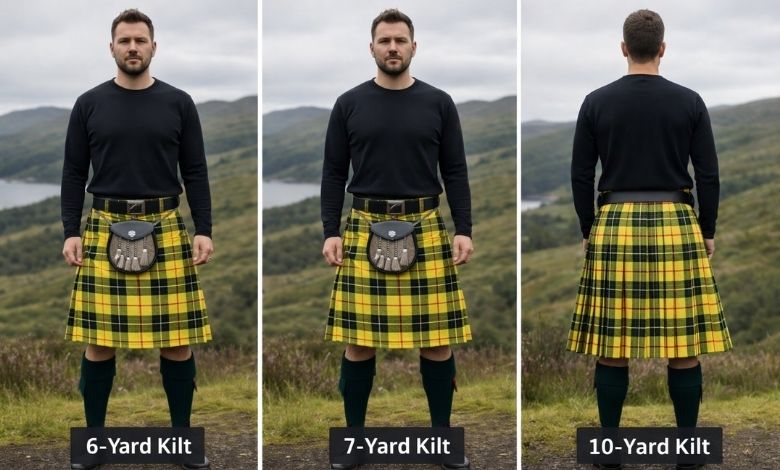
The size of the kilt’s fabric depends on your needs. Those who want something between 5 and 8 yards can choose anything from 6 to 7 yards. Some people consider 10-yard kilts to be the biggest ones, but it is a misconception because the Great Kilts are even more significant than them. When choosing any of these sizes, consider your body shape, height, and the event’s formality for a better decision.
Misconceptions About Kilt Yardage
- People assume only 8-yard kilts to be authentic, while every size is authentic, relying on the accuracy of quality and tartan patterns.
- A 5-yard kilt is thought to be cheap in quality and poorly made. Though less fabric is used, they are lightweight and not cheap.
- Kilts are 8-yard from day one. No, this is a misconception; they used more fabric when they were the Great Kilts.
- The greater the number of yards, the higher the quality it is. It is also a misconception because quality hides in fabric’s weight and level of craftsmanship.
Where to Buy 8 and 5-Yard Kilts
Hopefully, no question may be left regarding the 8- and 5-yard kilts after reading this guide. So, you are ready to make a decision and choose any of them now. No matter what size of kilt you need, visit The Utility Kilt, because our experts customize every kilt according to your needs. Not only tartan kilts, but we make all men’s kilts, including hybrid, leather, and utility kilts.