Are Leather Kilts Comfortable? What First-Time Wearers Should Know
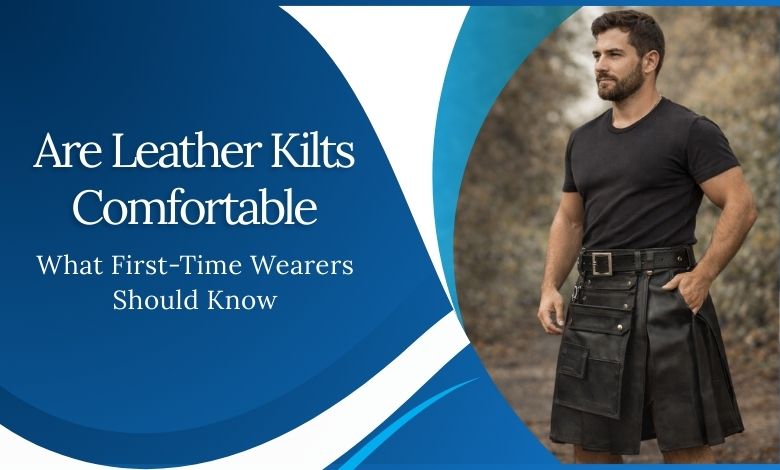
Leather kilts are known for their bold appearance and strong personality. They project confidence, individuality, and a sense of power. However, for first-time wearers, one common question always comes up: are leather kilts actually comfortable to wear? The answer is yes, but many wearers may have many concerns. This article explains everything whether leather kilts are comfortable or not and what a first-time wearer needs to know before wearing them.
What Makes a Leather Kilt Comfortable or Uncomfortable?
Comfort in a leather kilt is not based on appearance alone. Several practical elements work together to determine how it feels when worn for hours.
Types of Leather Used in Kilts and Their Comfort Levels
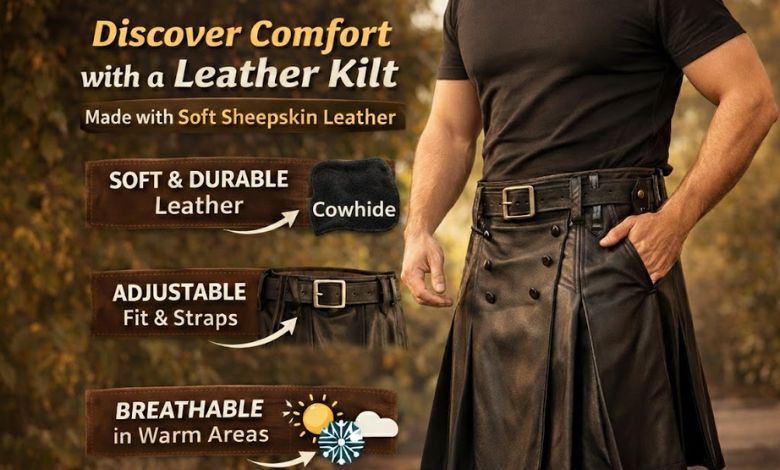
Not all leather feels the same. This is where many beginners go wrong. Surprisingly, many types of leathers are used in making kilts and all are comfortable, while the level of comfort may differ.
- Cowhide leather is durable and structured but can feel stiff at first. It’s ideal for rugged, utility-style kilts.
- Sheepskin or lambskin is much softer, lighter, and more flexible, making it one of the most comfortable options for beginners.
- Buffalo leather is thick and heavy, offering a bold look but requiring more break-in time.
For first-time wearers, softer leathers usually feel better right away and adapt to your body faster.
Fit and Sizing: The Biggest Comfort Factor
If the fit is off, even the finest leather may be unpleasant. Instead of sitting on the hips, leather kilts are made to sit at the natural waist. A kilt that is too loose might shift when walking or sitting, while a kilt that is too tight can limit movement and put pressure on the area around the waist. Because they enable minor adjustments in fit, adjustable straps are particularly useful for novices. A leather kilt that fits properly should feel snug without digging into the body.
Weight and Movement
It is first obvious that leather kilts are heavier than fabric kilts. The weight of a well-made leather kilt is distributed uniformly around the waist. Smooth walking, stair climbing, and sitting are all made possible by well-built pleating or panels. Because they don’t take into consideration natural body mobility, poorly manufactured kilts can feel rigid and uncomfortable.
Breathability and Temperature Control
Temperature is important since leather does not breathe like cotton or wool. Leather kilts provide warmth and protection in colder climates. Wearing them for extended periods of time might make them seem warmer in hot or humid areas. Kilts, on the other hand, enable greater ventilation than leather pants because they are open clothes. Because of this, leather kilts are easier to handle than most people think, particularly for nighttime wear or quick trips.
Breaking In a Leather Kilt
Leather is the only material that becomes soft with use. A new leather kilt often feels stiff during the first few wears. This is completely normal. Leather softens as it adjusts to body heat and movement. Over time, the kilt molds to the wearer’s shape and becomes noticeably more flexible and comfortable. Wearing the kilt at home for short periods helps speed up this break-in process and makes outdoor wear more enjoyable.
Comfort Compared to Other Leather Garments
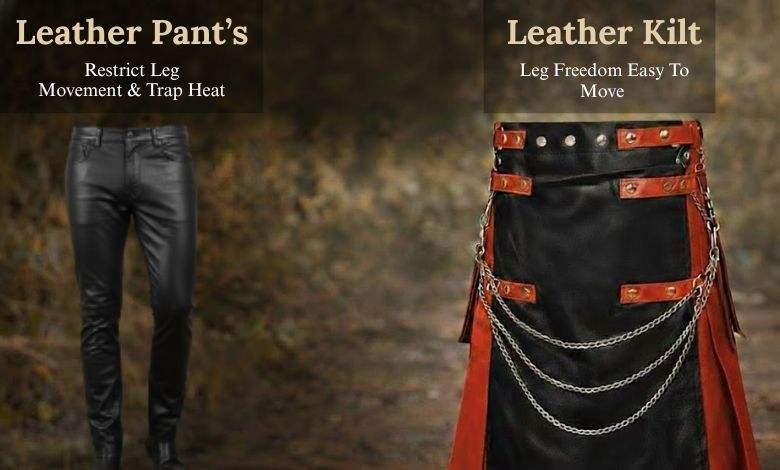
When compared to other leather clothing, leather kilts often feel more comfortable than expected. Leather pants can restrict leg movement and trap heat, while leather jackets place weight on the shoulders and arms. Leather kilts allow freedom of movement for the legs and reduce upper body strain. Once broken in, many wearers find that leather kilts are easier to wear for extended periods than leather pants or full leather outfits.
Tips for First-Time Leather Kilt Wearers
For first-time wearers, choosing the right leather kilt is essential. Beginners should avoid extremely thick leather or overly complex designs. Softer leather, moderate length, and simple construction make the experience much easier. Utility-style leather kilts are often a good balance between comfort and durability, especially for casual wear.
Pair Your Leather Kilt With Comfortable Clothing
What you wear with your leather kilt also affects comfort. Lightweight shirts help prevent overheating, while breathable footwear and proper kilt socks reduce strain during long wear. Some wearers prefer supportive undergarments designed for kilts, as these help reduce friction and improve overall comfort, especially during walking.
Test the Fit and Feel Before Wearing It Outside
Before wearing a leather kilt to an event, it is wise to test it at home. Wearing it for thirty to sixty minutes allows you to walk, sit, and move naturally while checking for pressure points. Small strap adjustments during this test can make a big difference later. This simple step prevents discomfort when you are outside or in social settings.
Build confidence to feel more comfortable.
Confidence plays a major role in comfort. Leather kilts naturally draw attention, and feeling self-conscious can make the garment feel uncomfortable even if it fits well. Standing confidently, walking naturally, and accepting the bold nature of the kilt helps the wearer relax. As confidence grows, the kilt feels more natural and enjoyable to wear.
Approach The Utility Kilt to Buy Extraordinary Leather Kilts
There are many stores that sell leather kilts, and a well-known name among them is The Utility Kilt. Leather kilts available at this store are made with cowhide leather which is durable as well as affordable. Apart from it, all men’s kilts whether they are leather or tartan are customized by our experts for the perfect size and fit, so there may be no complaints about the comfort. Numerous online kilt sellers do not propose return and exchange policies, but “The Utility Kilt<” does it for the convenience of our customers.