The Evolution of the Kilt Outfit: From Traditional to Modern
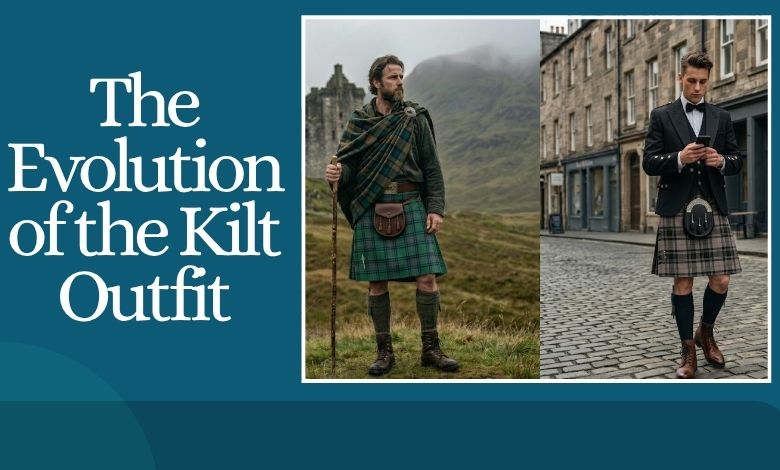
The Scottish kilt outfit is not just an ordinary attire instead it’s a statement. It is deeply rooted in Highland pride, clan identity, and also the centuries of tradition. The kilts have evolved from combat attire to formal dress. Kilt outfit is considered as the most iconic Scottish attire that has evolved from a practical item to a complete fashion statement. In this blog, we are going to explore the evolution of kilt outfit from traditional to modern outfit.
Origins of the Traditional Kilt Outfit
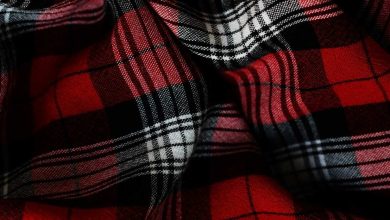
Scotland is globally considered as the country of tartans and kilts. These kilts are deeply enriched in the heritage and history of Scotland. The pleated designs helped Highlanders to move freely through the challenging terrain.
The Great Kilt
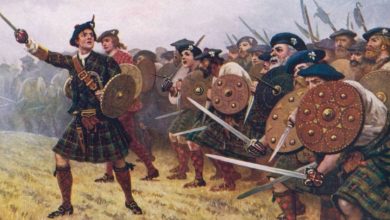
The earliest kind of the kilt is known as the “feileadh mór” that means “great wrap”. This belted plaid was a larger woolen cloth of roughly 5 yards or more than this. It draped beautifully around the body and also belted perfectly at the waist.
Early Materials and Construction
The early material used for making the kilt was woven wool. It is specifically chosen for the durability and warmth in Scottish Highlands. It was a single large piece of cloth that was hand pleated and belted at the waist. It served for multiple purposes like clothing, blanket, and also shelter in outdoor conditions. The early kilts often came up with the clan specific tartans that were used for the purpose of identification and symbolic representation.
Transition to the Modern Kilt
The evolution from the Great kilt to the modern kilt outfit that reflects changes in lifestyle, traditional practices, and fashion preferences. The transition to the modern symbolized the crucial shift from the purely practical kilt to the one that incorporated functionality, style, and also the cultural identity.
Introduction of the Small Kilt
By the 18th century, the Great kilt changed to féileadh beag that means smaller kilt that resembles the modern kilt that are so popular nowadays. This version of the kilt was pleated at the back and worn with a separate jacket. It makes it more practical for everyday wear.
Influence of Industrialization
Industrialization played a significant role to shape the modern kilt by transforming the production of the kilt. The advanced textile manufacturing helps to make the production of wool and tartan fabrics more efficient. Industrial growth influenced both design and functionality. It helps to transform the kilt from traditional handcrafted outfit to the widely adopted and adaptable outfit.
Development of Full Highland Dress
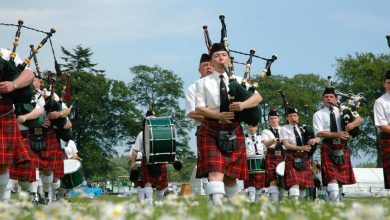
As the kilt became more refined and widely adopted, it transformed into a complete outfit called the Full Highland dress. This development symbolized a change from a single garment to a coordinated outfit that is designed to be worn at formal occasions, ceremonies, and also cultural events.
Addition of Jackets and Waistcoats
The addition of jackets and waistcoats played a key role in completing Highland outfit:
- Jackets: Prince Charlie and Argyll jackets were specifically designed to complement the kilt offering choices to wear during formal and semi formal wear.
- Waistcoats: Added to be worn beneath jackets to generate a layered and polished look.
- Structured fit: Tailored designs improved the complete silhouette while retaining comfort and freedom of movement.
Introduction of Accessories
Some accessories with modern kilt outfits are optional. They can be added as per the style preferences of the wearer. You can style these modern outfits with Ghillie Brogues that give the traditional look to the outfit. Some other accessories that can style with modern kilt outfit are as follows:
- Sporran: A pouch that can be styled with modern kilt outfit and worn at the front to keep essentials. They range from simple leather to ornate designs.
- Belt and Buckle: They are helpful to secure the kilt and emphasize the waistline.
- Kilt Pin: Another significant accessory is kilt pin. It helps to strengthen the front apron and also add the decorative details.
- Flashes: Garter ties that help to hold the kilt hose in place and also add visual contrast.
The Role of the Kilt Outfit in Formal and Cultural Events
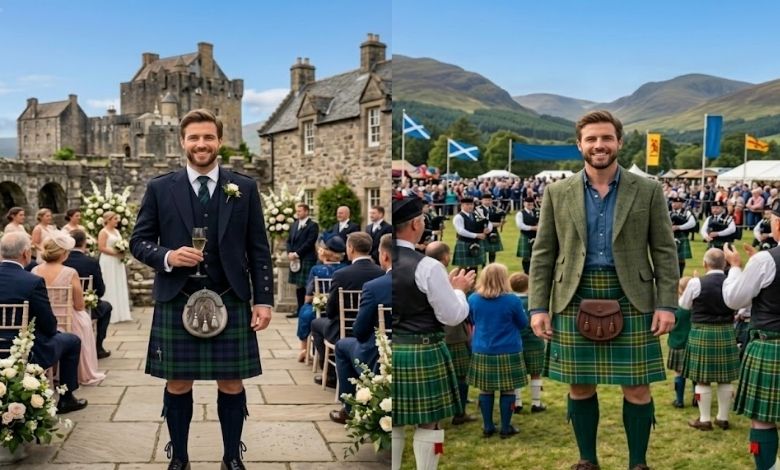
Traditional outfits that are ancient Scottish dress are particularly worn at formal events like weddings, black-tie events, etc. instead modern adaptation to the kilt outfit make them versatile. They can be worn at a variety of events like formal events, casual events, and sem-formal ones.
Modern Adaptations of the Kilt Outfit
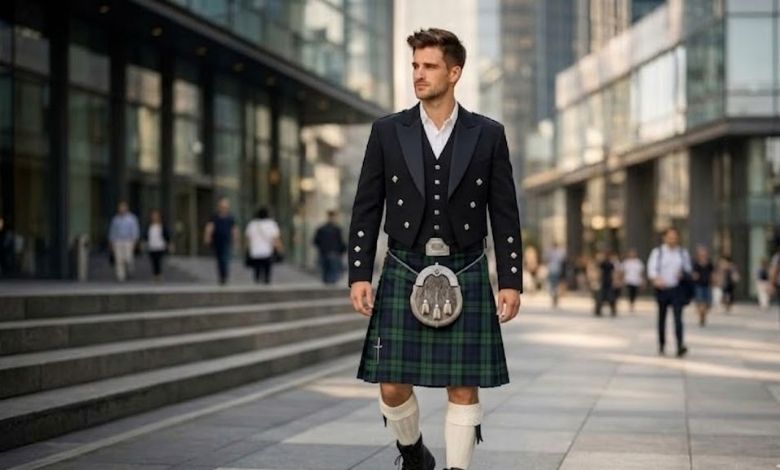
In modern days, the kilt outfit has transformed beyond traditional use for meeting the demands of contemporary lifestyle. New features and styles are incorporated to make the outfit more practical, accessible, and perfect for daily wear.
Casual and Everyday Kilts
These outfits are designed for extreme comfort and daily use. Commonly made from lightweight material to ensure breathability and freedom of movement. Using minimal accessories is another key factor for attaining a casual look. Functional features like pockets and adjustable waist systems are included for convenience. They can be styled with casual shirts to male a complete kilt outfit for casual wear.
Fashion and Global Influence
Modern kilts outfits are the reason for breaking traditional boundaries. These outfits combine the tradition with the extra functionality and provide a versatile modern appeal to the kilt outfit. Designers have also showcased these outfits in fashion runways and displayed them as bold and gender-neutral attires. Thus, they are becoming famous globally due to their unique look and numerous benefits.
Materials and Design Innovations
With the passage of time, the kilt has evolved not only in style but also in materials and design that shows modern requirements while respecting tradition. These innovations regarding fabric material, design, and functional features have enhanced the versatility and elegance of the kilt outfit.
Traditional Wool vs Modern Fabrics
Here are some of the key features relevant to the traditional wool fabric of the kilt and modern kilt fabrics.