What Makes a Tartan “Scottish” or “Irish”?

A majority assumes that kilts worn by Scots and Irish people are the same. The traditional kilts may have the same design, but they differ significantly from the tartan pattern perspective. The colorful checkered design on them is tartan, and both countries have their own patterns with dissimilar features. This article is a guide for them, as it will explain what makes a tartan Scottish or Irish. So, let’s begin it with comprehending Irish patterns.
Irish Tartan Patterns
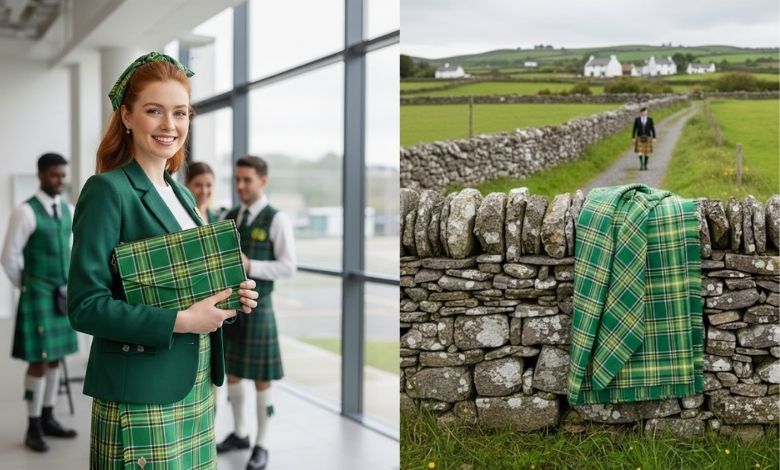
Irish tartans are visually simple and aged just over a century. These designs are region-specific and worn at formal settings only. Therefore, the number of Irish tartans is very minimal.
Color Palette Characteristics
Even though most of the colors are utilized in Irish patterns, some of them are specific to the country. Saffron is the most traditional color, while green and white are also the iconic shades. We would like to mention here that all dyes connected with saffron, whether they are orange or yellow, have equal importance.
Pattern Simplicity & Structure
While talking about the checkered patterns of Irish tartan, they are simpler and have long boxes. Moreover, they have fewer lines, creating distinctive designs, and are pretty easy to identify.
Modern Adaptability
When it comes to the adaptability of Irish tartan in the modern era, they are becoming common in everything. Undoubtedly, Irish kilts and some of their accessories are the primary things; therefore, they have a flexible integration into modern fashion and various garments.
Events to Wear Irish Tartan
Irish tartans are not everyday wear, and Irish people prefer wearing them at formal settings only. This is the reason the universal patterns are also not common. However, some Irish events to wear Irish tartans are St. Patrick’s Day, the National Day of Commemoration, and many others.
Scottish Tartan Patterns
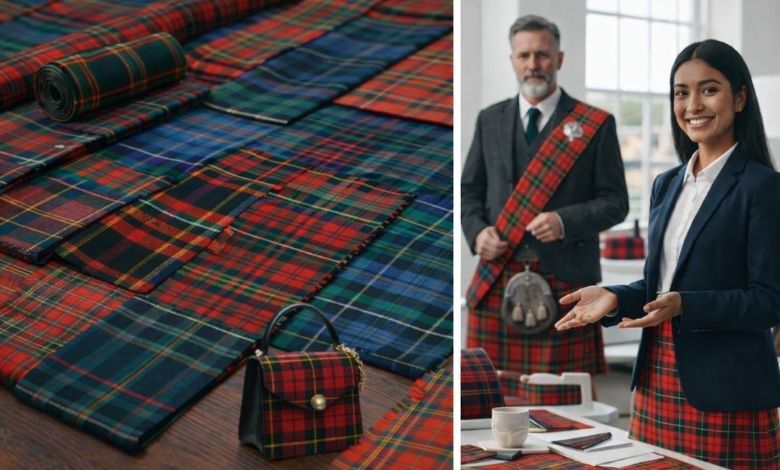
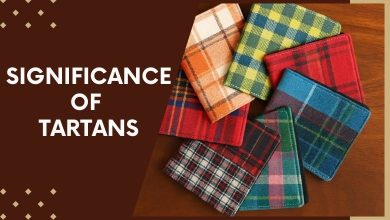
We shall now examine the Scottish tartan patterns that are clan-based and exist in thousands of designs. The intricate horizontal and vertical stripes offer them unique looks.
Complex Color Combinations
Scottish tartans are identified by their rich color schemes. The blending of several colors frequently symbolizes clan identity, natural landscapes, or historical meaning. They are more intricate Irish patterns and are visually richer because deep reds, blues, greens, and blacks are frequently utilized.
Pattern Variations & Naming Conventions
Scottish tartans differ from others, as they follow a specific naming system, which links them with clans, families, regions, or institutions. Moreover, they have several variations, such as ancient, modern, or weathered, showing their extensive adaptability.
Wide Application Across Textiles
The last thing that we cannot miss here is their versatility in use, as they are part of every industry today. Scottish tartans are used in tartan kilts, fly plaids, kilt hose, and all other accessories. However, their adaptability transcends the fashion industry, and they are commonly used in home decor, including tablemats, bedsheets, and more. Overall, they are strong symbols of Scottish heritage and have global popularity.
Comparison Table of Differences Between Irish and Scottish Tartans
| Features | Irish Kilts | Scottish Kilts |
| History | Just over a century old; relatively recent | Centuries-old; traditional and historic |
| Color Palette | Simpler colors; saffron, green, white are iconic | Rich and complex; deep reds, blues, greens, blacks |
| Pattern Complexity | Simple, with long boxes and fewer lines; easy to identify | Intricate horizontal & vertical stripes |
| Naming & Symbolism | Region-specific, limited designs, no formal naming conventions | Clan/family/institution-based naming; variations like ancient, modern, weathered; rich symbolism |
| Usage and Adaptability | Mainly formal events; modern fashion integration increasing | Extremely versatile; kilts, accessories, home textiles; widely recognized globally |
| Cultural Significance | Represents Irish heritage; worn selectively | Strong symbol of Scottish heritage |
How Tartan Patterns Are Identified Today
Identifying Irish and Scottish tartan patterns is not challenging today, as they are possible to be identified through registered records, historical references, and weaving specifications. The complexion hidden in Scottish and Irish tartans also makes things easier. Moreover, Scottish tartans are officially cataloged by the Scottish Register of Tartans. If we talk about the Irish tartans, they are primarily identified by county or national associations.
Common Misconceptions About Tartan Patterns
As we have already mentioned that some people consider Scots and Irish people to wear the same tartan patterns, it leads to some misconceptions. Therefore, knowing them and making corrections is necessary to admire both cultures.
- It is common thought that Irish kilts are exclusive to kilts only. In fact, they are also used in other industries.
- All Scottish tartans represent families or clans. No, some tartans in Scotland are region-based as well, and universal patterns have no family or regional limits.
- According to some people, all Irish kilts include saffron or green as their compulsory shades. This is not right, as Irish tartans are available without them.
- All Irish and Scottish tartans are registered; this statement is not right because unregistered patterns are also worn in Scotland.
Explore the Collection of the Utility Kilt of Buy Tartan Products
Hopefully all the information about Scottish and Irish tartan patterns should have been clear. Whether you want to buy kilts or tartan plaid fabrics to make something unique, The Utility Kilt has everything at affordable prices. Remember, cost-effectiveness has no connection with quality, as our products offer both things. So, visit our collection right now, and hopefully you’ll find whatever you want. In case the required tartan is not listed, contact us; we’ll arrange it for you.